

Day, night and poor weather
Light- and medium-duty capability
Planned around terrain and vehicle position
When the vehicle cannot be driven afterward
More Than an Ordinary Tow
A winch out starts with getting the vehicle back to stable ground.
A routine tow usually begins with a vehicle that can be reached
and loaded normally. A recovery begins with a vehicle in a difficult
position—below the roadway, sunk into unstable ground, blocked by snow
or resting at an angle.
The safest practical recovery method depends on much more than how close
the vehicle appears to the road. Vehicle weight, angle, wheel direction,
traction, access, anchor points, nearby obstacles and potential damage
all affect the recovery plan.
Repeatedly spinning the tires or pulling from an unsuitable attachment
point can bury the vehicle deeper or cause additional damage.
If the vehicle is not moving, stop and call before the situation becomes
more complicated.
- Cars, SUVs, pickups and work vehicles
- Snow, ice, mud and soft-ground recovery
- Ditches, shoulders and off-road locations
- Private roads, driveways and rural access
- Recovery followed by towing when necessary
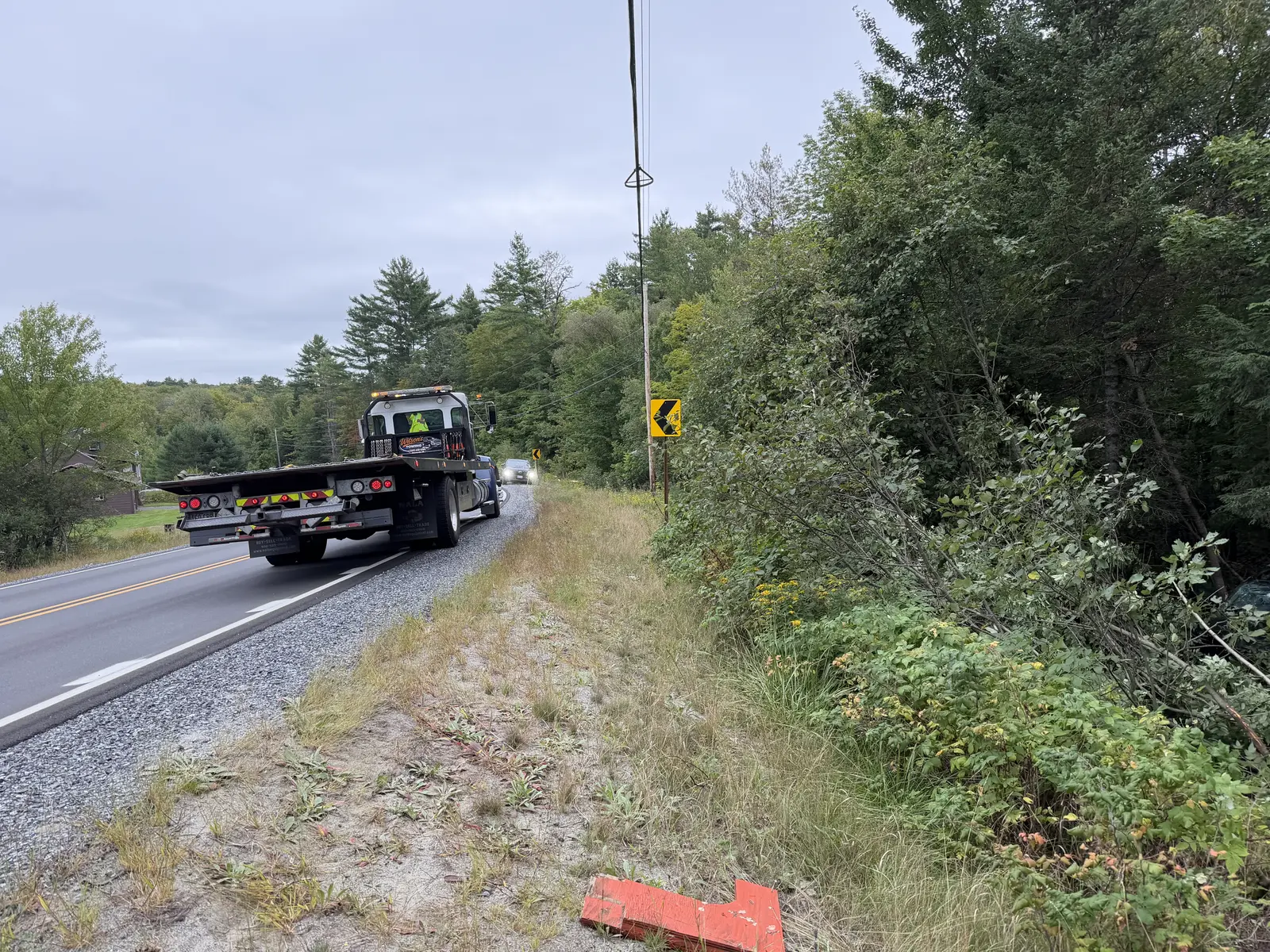
Common Recovery Calls
Winch out service for real Central Maine conditions.
From winter slide-offs to spring mud and soft shoulders,
each recovery scene requires its own assessment and equipment plan.
Snowbank & Ice Recovery
Vehicles that slide from the roadway, lose traction on an icy grade
or become buried along a plowed driveway, road edge or parking area.
Ditch & Shoulder Recovery
Cars and trucks resting below the travel surface,
across a soft shoulder or at an angle that prevents
a safe return to the roadway.
Mud & Soft Ground
Vehicles sunk into saturated yards, fields, road edges,
construction areas, camp roads or thawing ground.
Off-Road Recovery
Recovery when a vehicle travels beyond the shoulder,
down an embankment or into terrain where ordinary loading
is not possible.
Driveway & Private Road
Winch out service on steep, narrow, icy or unpaved access routes
where truck placement and pulling direction require additional planning.
Accident Recovery
If the vehicle left the roadway because of a collision,
rollover or other crash, visit our
Accident Towing & Recovery
page for accident-scene management, documentation,
specialized recovery and secure storage.
Before the Truck Arrives
Details that help us prepare for the recovery.
A winch out can require different equipment depending on
the vehicle, terrain and position. Give dispatch as much
information as you safely can.
Exact Location
Address, road name, direction of travel, mile marker
or the nearest recognizable landmark.
Vehicle Information
Year, make, model, approximate size
and whether the vehicle is carrying a load.
Current Position
Tell us whether the vehicle is in snow, mud, water,
a ditch, on a slope, along a shoulder or near a driveway edge.
Distance & Angle
Estimate how far the vehicle is from stable ground
and whether it is leaning or positioned at an unusual angle.
Visible Damage
Mention flat tires, leaking fluids, deployed airbags,
broken suspension or parts contacting the ground.
Scene Hazards
Traffic, guardrails, trees, poles, wires,
water, steep grades or limited access for a recovery truck.
Photos can help dispatch understand the scene,
but do not enter moving traffic, climb a dangerous slope
or place yourself at risk just to take them.
A Planned Recovery
How a winch out generally works.
Every recovery is different, but the overall process
follows the same principle: assess first, then move the vehicle
in a controlled manner toward stable and accessible ground.
1. Assess
We evaluate the vehicle position, terrain,
visible damage, hazards and truck access.
2. Prepare
The recovery truck and equipment are positioned
for controlled movement of the vehicle.
3. Recover
The vehicle is carefully moved toward stable,
accessible ground using the appropriate recovery method.
4. Recheck
Once recovered, we determine whether the vehicle
can be safely driven or needs transport.
Seasonal Recovery in Maine
Snow is only part of the problem.
Winter produces obvious recovery calls, but spring thaw
and heavy rain can make shoulders, private roads, yards
and camp roads equally difficult.
Ground that supported a vehicle earlier in the season
may become soft or unstable once the frost leaves the ground.
Rural roads and private properties can also present narrow access,
steep grades and limited turnaround space.
Tell dispatch about gates, low branches,
steep hills or other access restrictions before the truck arrives.
For seasonal preparation and safer winter travel,
review the
National Highway Traffic Safety Administration’s winter-driving guidance
.
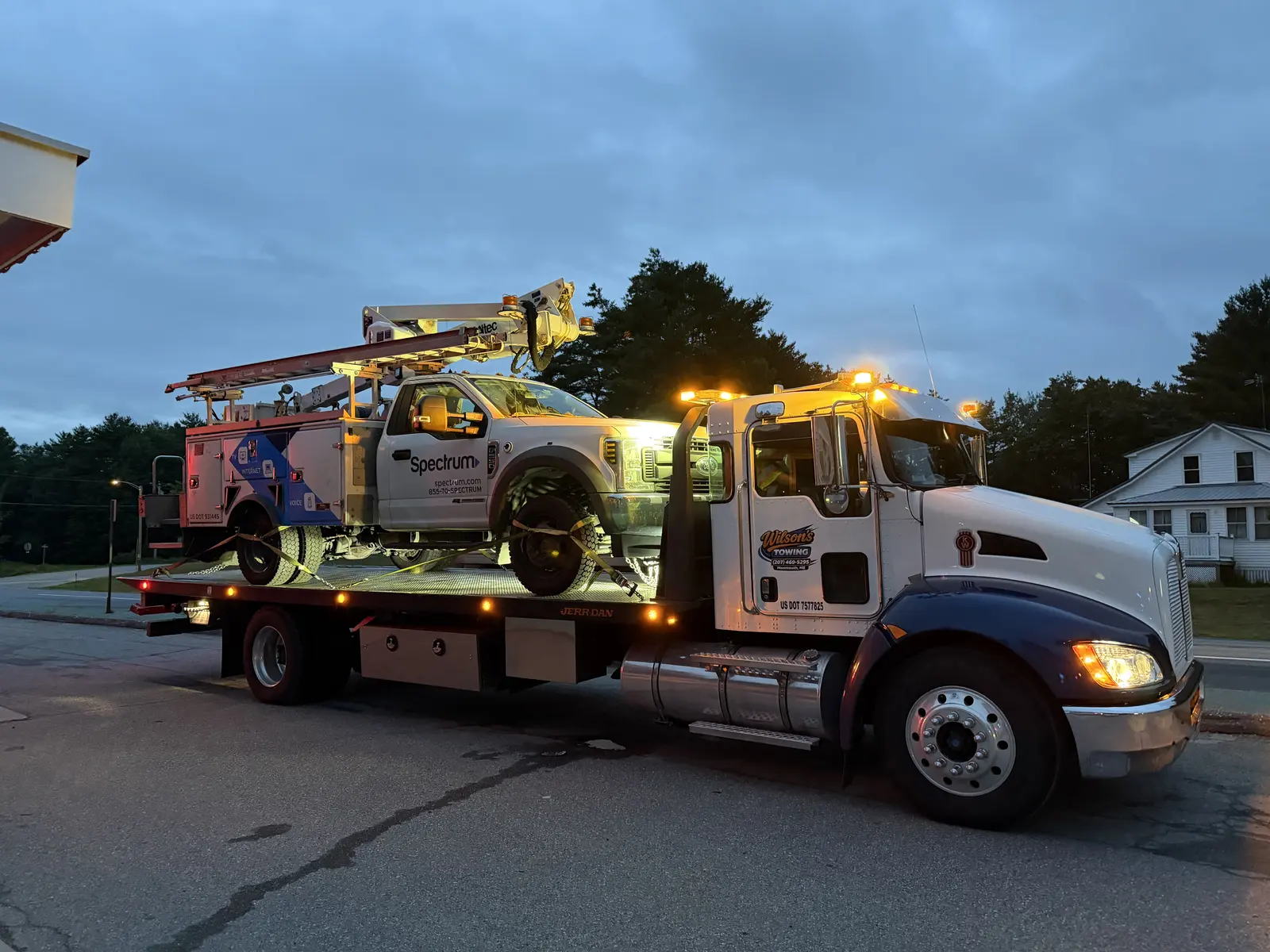
After the Recovery
Sometimes the winch out is only the first step.
Once the vehicle is back on stable ground,
we can determine whether it can be safely driven
or whether transportation is the better option.
Vehicle Can Be Driven
If there is no obvious damage and the vehicle
can be operated safely, recovery may be all that is required.
Vehicle Needs Towing
If the vehicle has mechanical damage, flat tires
or cannot be driven safely, Wilson’s can transport it.
Accident-Damaged Vehicle
Collision and rollover recoveries may require
accident-scene management, documentation and secure storage.
Central Maine Recovery Coverage
Winch out service across the region.
Wilson’s provides vehicle recovery in Monmouth, Augusta,
Lewiston, Auburn, Winthrop, Gardiner, Hallowell,
Readfield, Manchester, Sabattus, Litchfield
and surrounding Central Maine communities.
Availability and response time depend on truck location,
weather, access, current calls and the equipment required.
Monmouth
Augusta
Lewiston
Auburn
Winthrop
Gardiner
Hallowell
Readfield
Manchester
Sabattus
Litchfield
I-95 Corridor
Vehicle Recovery Questions
Winch out service FAQs.
Is winch out service available 24 hours?
Yes. Wilson’s answers vehicle recovery
and towing calls 24 hours a day,
seven days a week.
Should I keep trying to drive out?
If the wheels are spinning or the vehicle is at an unsafe angle,
stop. More attempts can dig the vehicle deeper
or worsen its position.
Can you recover a vehicle from snow or mud?
Yes. The equipment required depends on vehicle size,
depth, position, access and ground conditions.
Will the vehicle need to be towed afterward?
Not always. If the vehicle is undamaged and safe to drive,
recovery may be enough. If it is damaged or disabled,
towing may be necessary.
Can you recover work trucks?
Wilson’s has light- and medium-duty capability.
Call with the vehicle type, approximate weight,
load and position so dispatch can evaluate the situation.
How much does a winch out cost?
Pricing depends on the vehicle, location,
access, recovery difficulty, equipment
and time required. Call with scene details
for current pricing.
Vehicle stuck in Central Maine?
Call Wilson’s for 24/7 winch out,
vehicle recovery and towing service.
–>